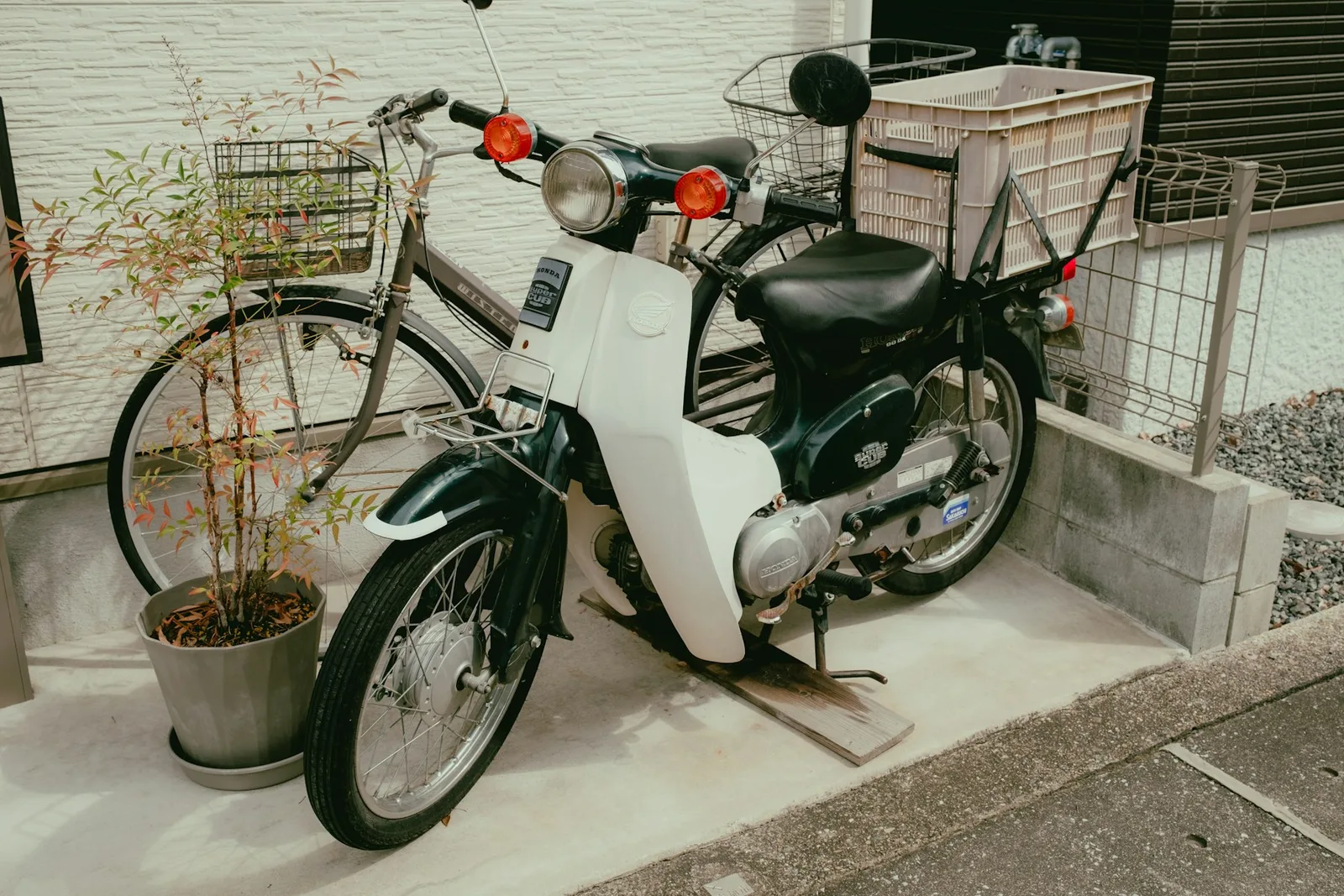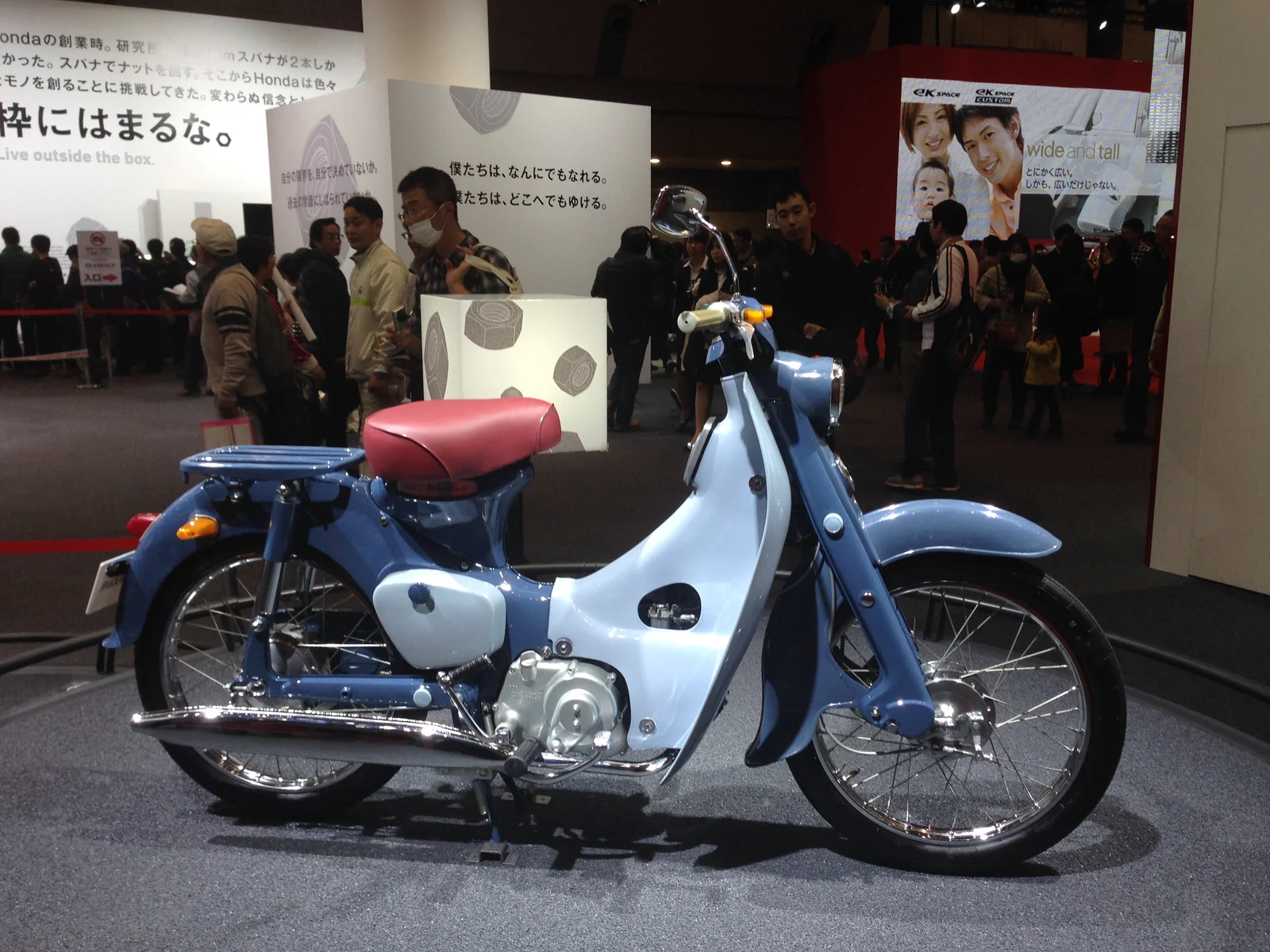
Before the Cub had become a familiar outline, somebody had to decide how big it should be. The answer began surprisingly close to the ground. Designer Jozaburo Kimura’s recollections make the wheels feel less like a finishing detail and more like the first sentence of the whole design.
A motorcycle drawn around its rider.
Honda wanted manageable proportions and easy footing. The team settled on a 2.25-inch tyre for a 17-inch rim. With the engine low between the wheels, Kimura could arrange the step-through space, saddle and handlebars into a compact whole.
A wheel measurement can seem dry until you imagine it controlling everything around it. Raise the bike and getting a foot down changes. Lower it and space becomes precious. The friendly impression of the finished machine rests on these quiet decisions about bodies and movement.
First, make the thing that does not exist.
The required tyre size was not then made in Japan. For the mock-up, the team cut down existing 18-inch tyres and joined the ends. After larger suppliers declined the production job, a smaller manufacturer agreed to make the new size.
It is a wonderfully physical image of design work: an almost-right component, a cut, a join, and suddenly the proportions can be judged at full size. A drawing explains an idea; standing next to the thing lets people argue about the same reality.
There is a little cinema in the shape.
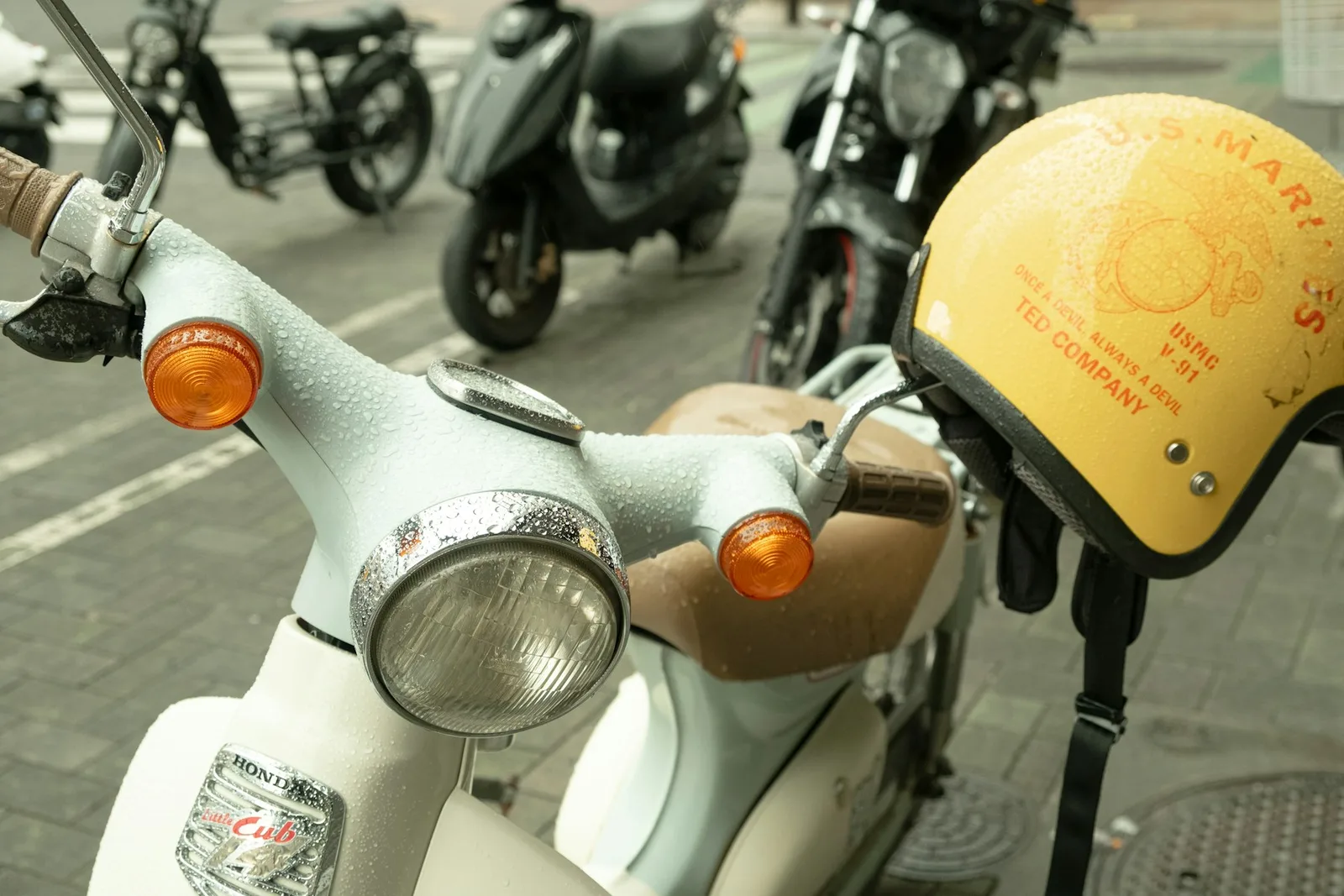
Kimura recalled Bambi braking with its forelegs as an influence on the front fork. His colour memories included the sea and sky, while a piece of Venetian glass in the film Summertime helped suggest the reddish-purple saddle. The apparently matter-of-fact Cub had an imaginative inner life.
That mixture is the pleasure of looking closely. The machine had to work, but somebody also considered its stance, its warmth and the relationship between one colour and another. Those choices give a practical object a personality you can recognise across a street.
Try looking at the gaps.
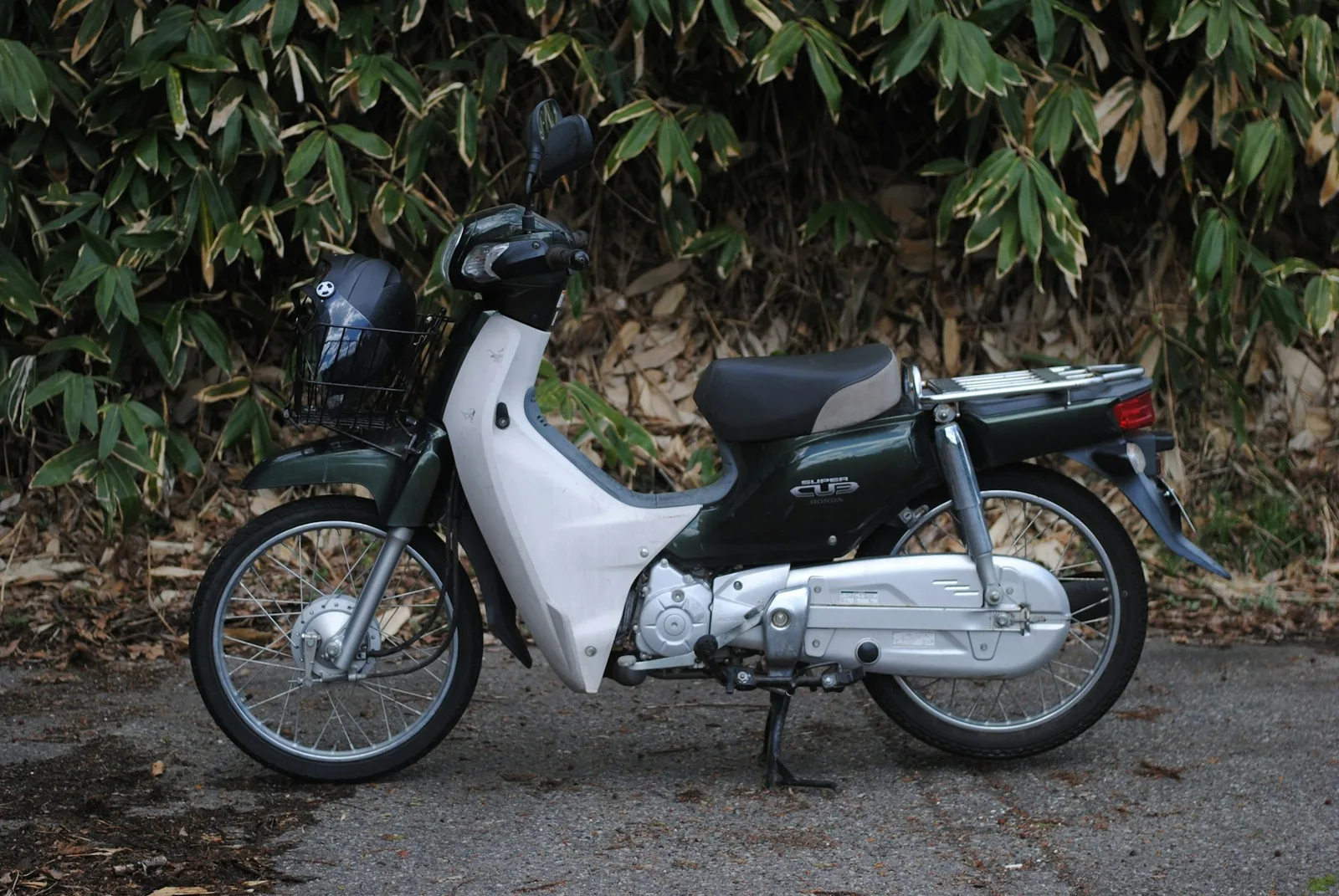
In the profile photograph, notice the open space above the engine, the uninterrupted sweep of the leg shield and the little saddle perched over the rear wheel. Look at the air between the parts as well as the parts themselves.
This is a later Cub, so it is not a dimensioned record of the C100 prototype. It is a useful way to see the persistence of a visual idea. Long after a particular component has changed, the relationship between things can still feel familiar.
Read Jozaburo Kimura’s account.
The tyres, the clay model, the colours—and the unexpected film references.
Open the original archiveThe sources behind the story.
An original Cub Club summary and commentary. Factual references are below; personal interpretations are labelled in the text.
- Honda — The Birth of the Super Cub, part 2
Kimura and chassis designer Yoshiro Harada recall wheel sizing, mock-ups, supplier difficulties, form and colour. The visual reading is ours.
Visit original source