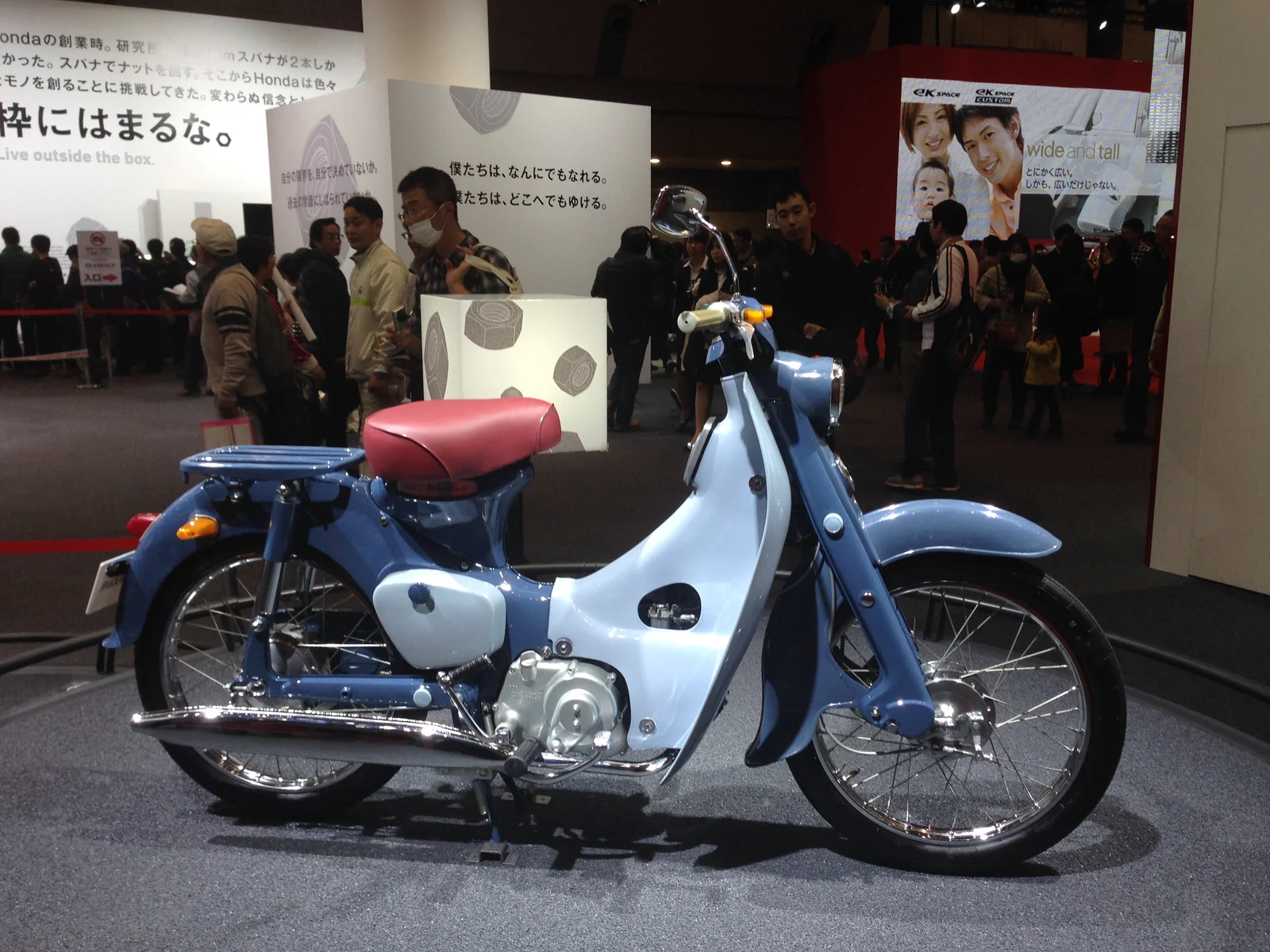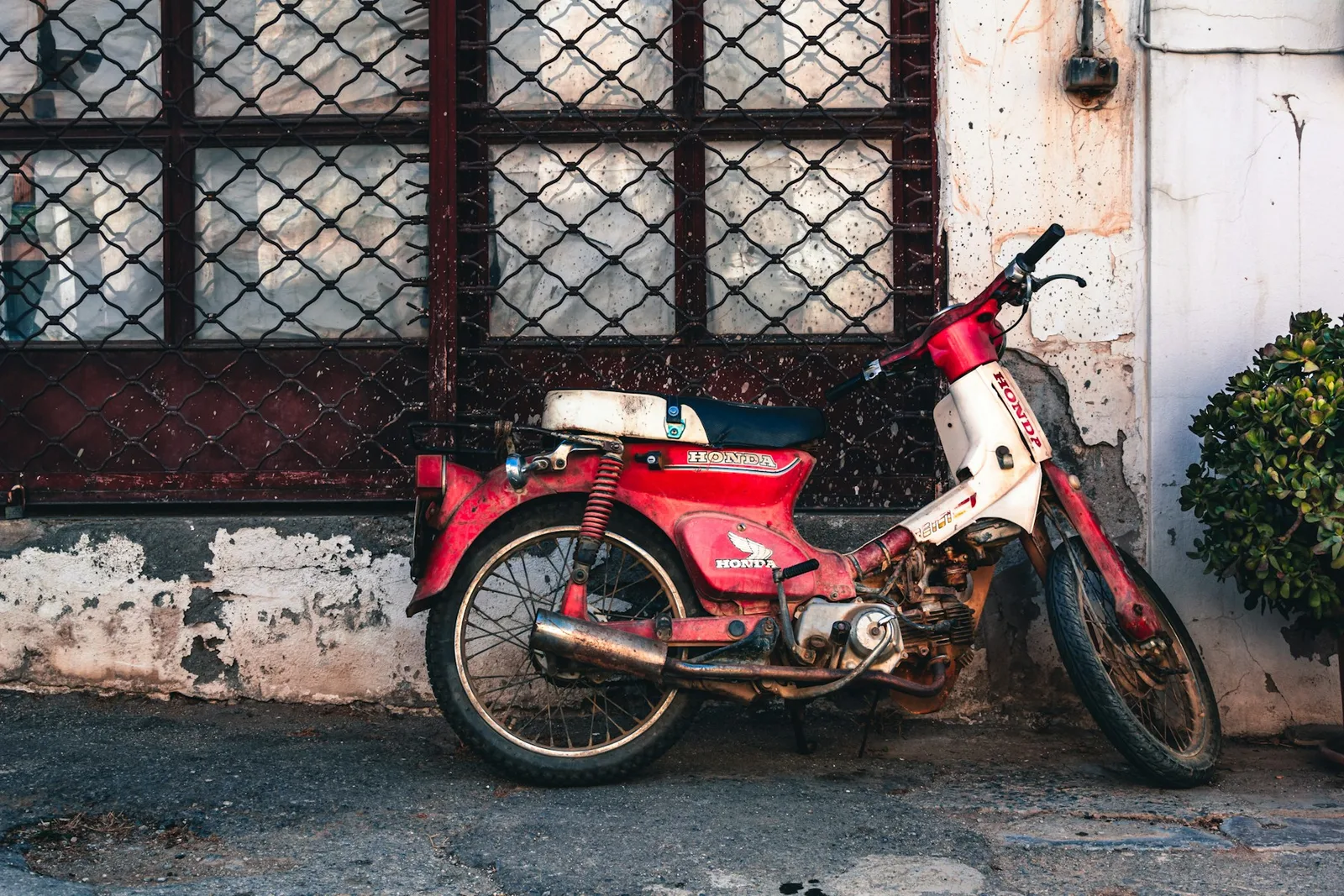
Every great product story gets tidier with retelling. It is tempting to imagine the Super Cub arriving somewhere new and immediately winning everybody over. Belgium supplies a more interesting chapter: a brave investment, a slow reception and a willingness to change the answer.
Build a place in the neighbourhood.
Honda established a European subsidiary in West Germany in 1961. Two years later it began making motorcycles in Belgium. Its own history presents local production as a way to develop relationships with workers, suppliers and dealers, rather than treating Europe simply as an export destination.
The Aalst factory broke ground in October 1962. On 27 May 1963, with part of the building still unfinished, its first Super Cub C100 came off the line. It is an evocative beginning: a finished motorcycle emerging from a factory that was still taking shape.
Europe already had a small-bike culture.
The Cub was entering a market accustomed to pedal-equipped mopeds and two-stroke engines. Honda’s retrospective acknowledges that the C100 did not become an immediate European hit. Four-stroke engineering alone was not enough to displace local habits.
That admission matters. Familiarity is part of how people judge usefulness. Something that feels refreshingly simple in one setting can feel unfamiliar in another. A design travels inside a network of expectations about shops, repairs, roads and how a vehicle ought to behave.
The answer acquired pedals.
The Belgian operation turned to the C310, a pedal-equipped model based on the Port Cub C240. Honda describes it as its first locally specified overseas production model. The experience also fed into the development of the P25 Little Honda.
This is why the model codes are worth keeping. The C310 is not simply a C100 wearing a European badge. It represents a different response to a different market. The Cub opened the door; another little Honda helped the company learn how to stay.
Keep the awkward chapters.
The detours are often more useful than the victory laps. Here, progress meant listening to an established culture of small motorcycles and adjusting a product that had already proved itself elsewhere.
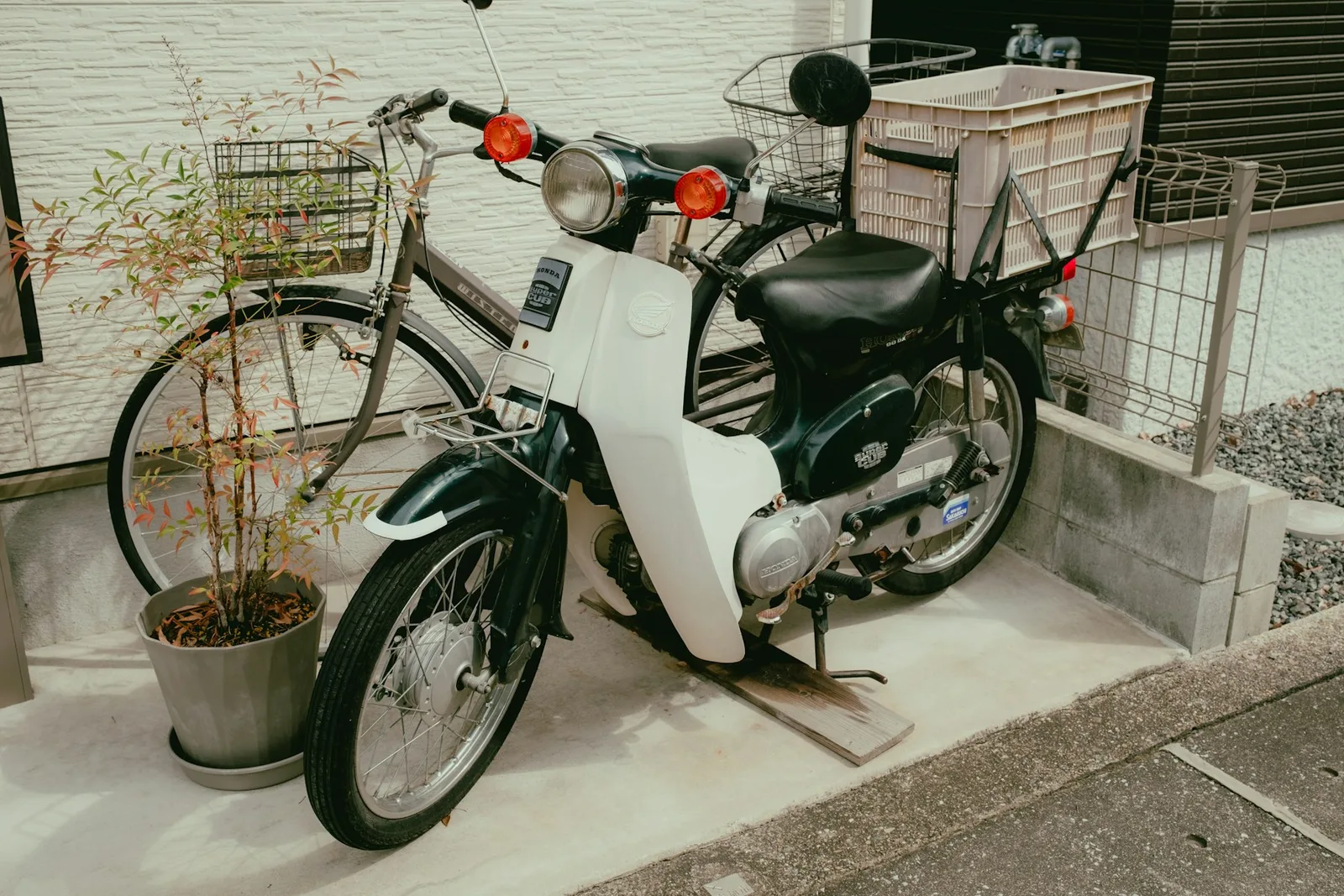
The contemporary photograph pairs a Cub with a bicycle; it is a visual prompt about neighbouring forms of everyday transport, not a picture of the Belgian factory. Honda’s original account below includes the actual plant and the C310. The difference is worth seeing.
Inside the early Aalst operation.
Honda’s account includes the first factory and the locally assembled C310.
Open the original archiveThe sources behind the story.
An original Cub Club summary and commentary. Factual references are below; personal interpretations are labelled in the text.
- Honda — Going Global: Europe
European expansion, the C100’s reception, and the C310 and P25 response.
Visit original source - Honda — Establishing Belgium Honda / 1963
Aalst construction and the dated start of production on 27 May 1963.
Visit original source