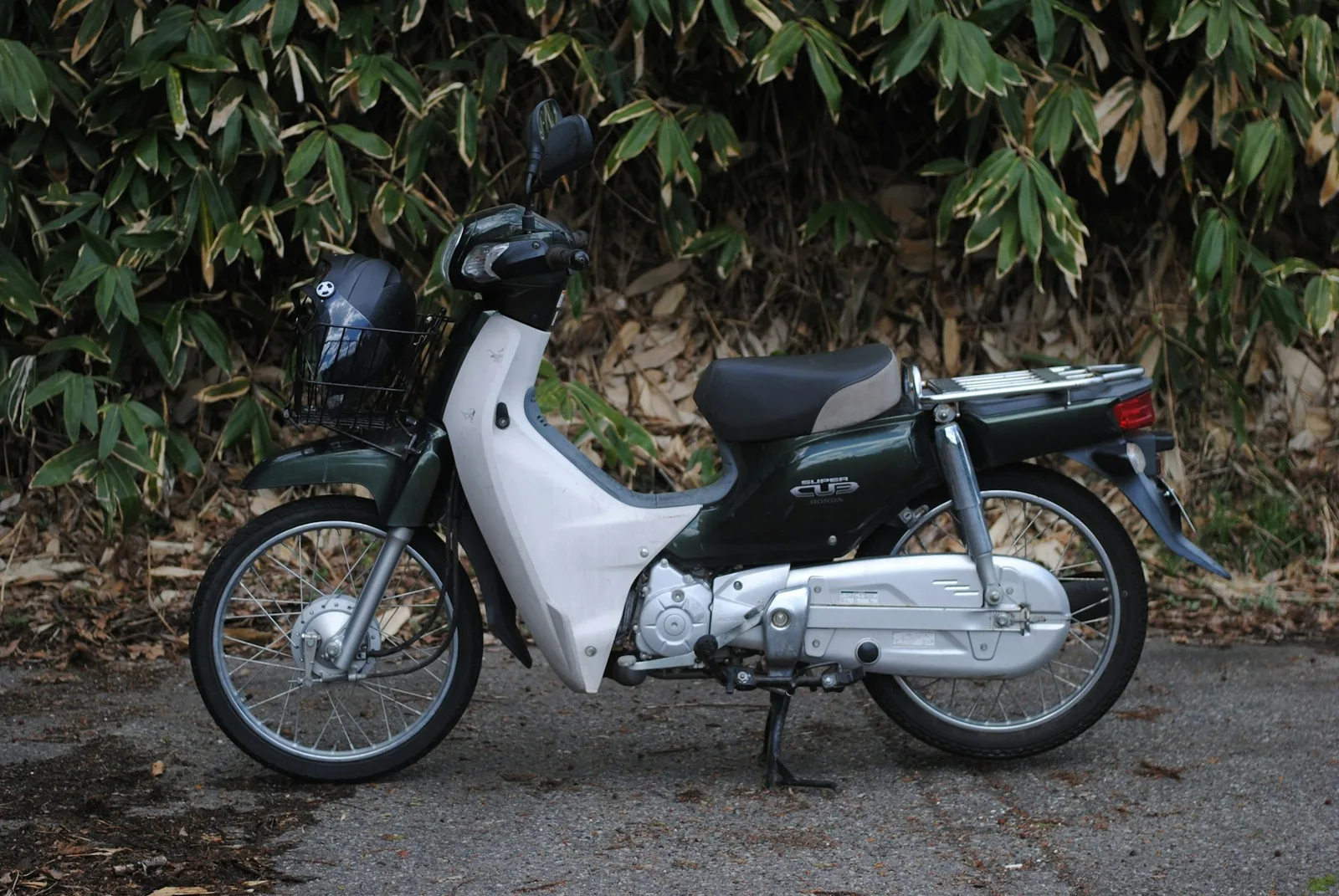
There is a lovely plot twist in the Cub family tree. A small motorcycle designed around everyday transport in Japan found itself in American pickup trucks, heading out for fishing trips. The people using it were quietly writing the brief for a different kind of Honda.
The ride after the drive.
Honda’s CT history traces the idea to American customers using Cubs around outdoor recreation. The company also courted sporting-goods retailers. A small bike could travel in a pickup, then carry its rider beyond the point where the truck stopped.
That is a different scale of adventure: less expedition, more useful extra reach. It helps explain the appeal of a bike you can see over, move around and fit into plans that were already happening. The motorcycle does not have to be the entire holiday.
Off came the leg shield.
The 1961 CA100T Trail 50 took the C100 as its starting point. Honda removed the leg shield and front mudguard, fitted block-pattern tyres and used a large rear sprocket. A carrier and under-guards were available as options. The bright scarlet machine had acquired a new purpose without abandoning its modest size.
The changes are revealing. Road manners and clean trousers mattered in town; clearance, grip and carrying gear mattered on a track. Compare the period photographs and you can almost read the new brief directly from the silhouette.
A family starts to branch.
The Trail 55 followed in 1962. An upswept exhaust appeared in 1963, then the 87 cc CT200 Trail 90 in 1964. The CT90 arrived in 1966 with an overhead-cam engine; later versions gained an auxiliary transmission. Honda’s model-by-model archive is particularly useful for seeing this evolution.
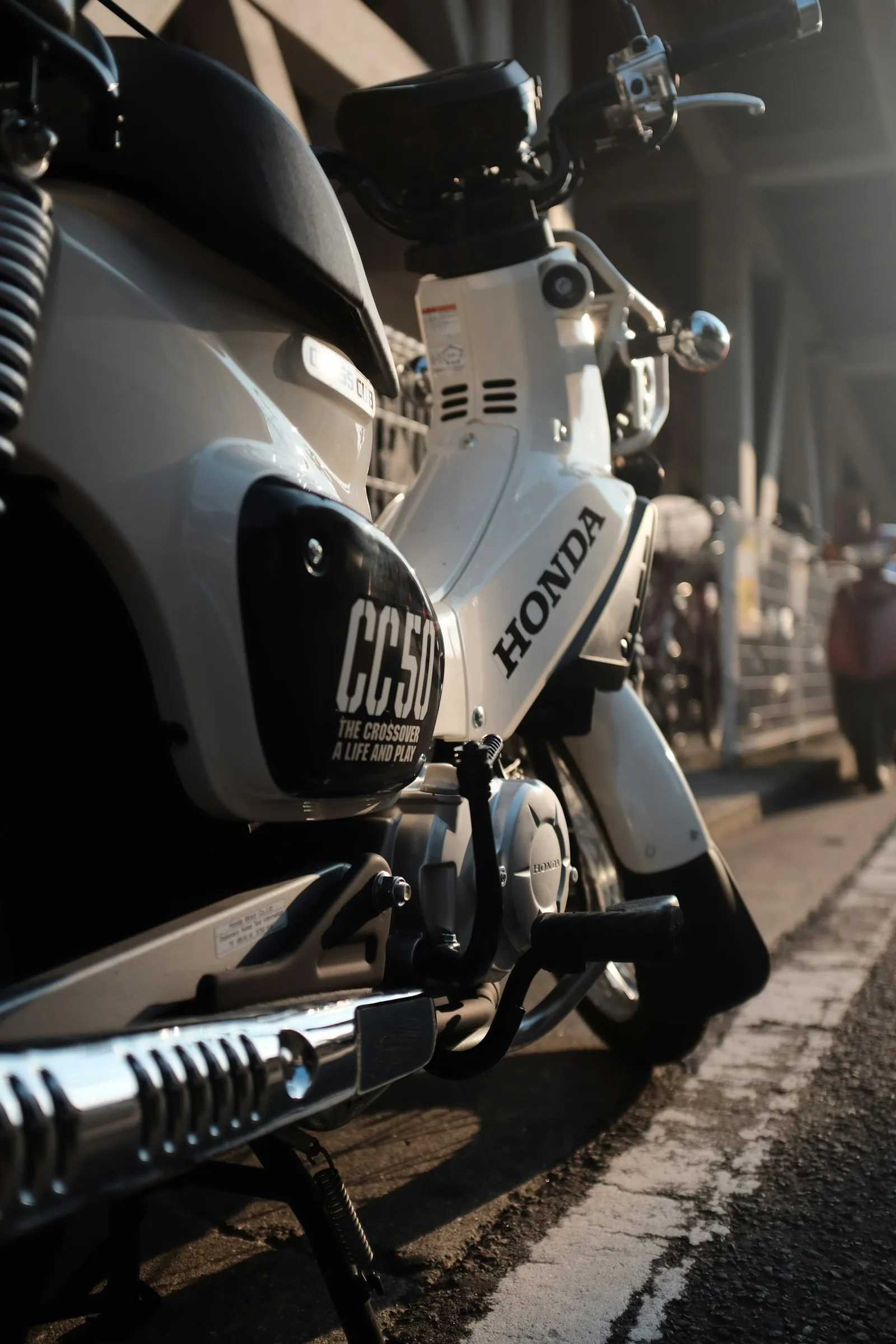
Our photograph shows a much later Cross Cub 50, identified on its side cover. It is a contemporary illustration of the wider family’s outdoorsy streak. For the original scarlet Trail 50 and its successors, follow the period model guide below.
Adventure, at a smaller scale.
What makes the story worth revisiting is the direction of travel. A use emerged, someone paid attention, and a practical variation became a family of its own. You can have a strong design idea and still leave room for people to surprise you.
A little trail bike carries a rather generous suggestion: the interesting road might be close to home. You do not need an enormous machine for the prospect of a small detour to feel exciting.
From the scarlet Trail 50 to the CT90.
Honda’s illustrated chronology includes the 1961 advertisement and the evolving bikes.
Open the original archiveThe sources behind the story.
An original Cub Club summary and commentary. Factual references are below; personal interpretations are labelled in the text.
- Honda — CT Stories: The Real Story, from the U.S.
The American outdoor-use story and dated CA100T, Trail 55, CT200 and CT90 chronology. Personal observations are editorial.
Visit original source