The Cub began in Japan. Its meaning was never going to stay in one place. Follow the bike into other countries and the story becomes less about an export and more about daily life.
Different places. Different needs.
Honda’s history of its expansion recognises the differences between Southeast Asian countries. Asian Honda was established in Thailand in 1964 after earlier research through a Singapore office. A retail network and after-sales support were central to its approach.
Local production followed. Honda’s account describes the Cub’s growth across the region as steady work over decades, alongside changing economies and transport needs.
By 1967, Super Cub production had begun locally in Thailand. Advertising changed too: Honda ran a Thai version of the Nicest People campaign. In the 1980s, singer Nantida Kaewbuasai appeared in advertisements for the locally produced C70/90. An imported idea was gaining local voices.
The useful things become familiar.
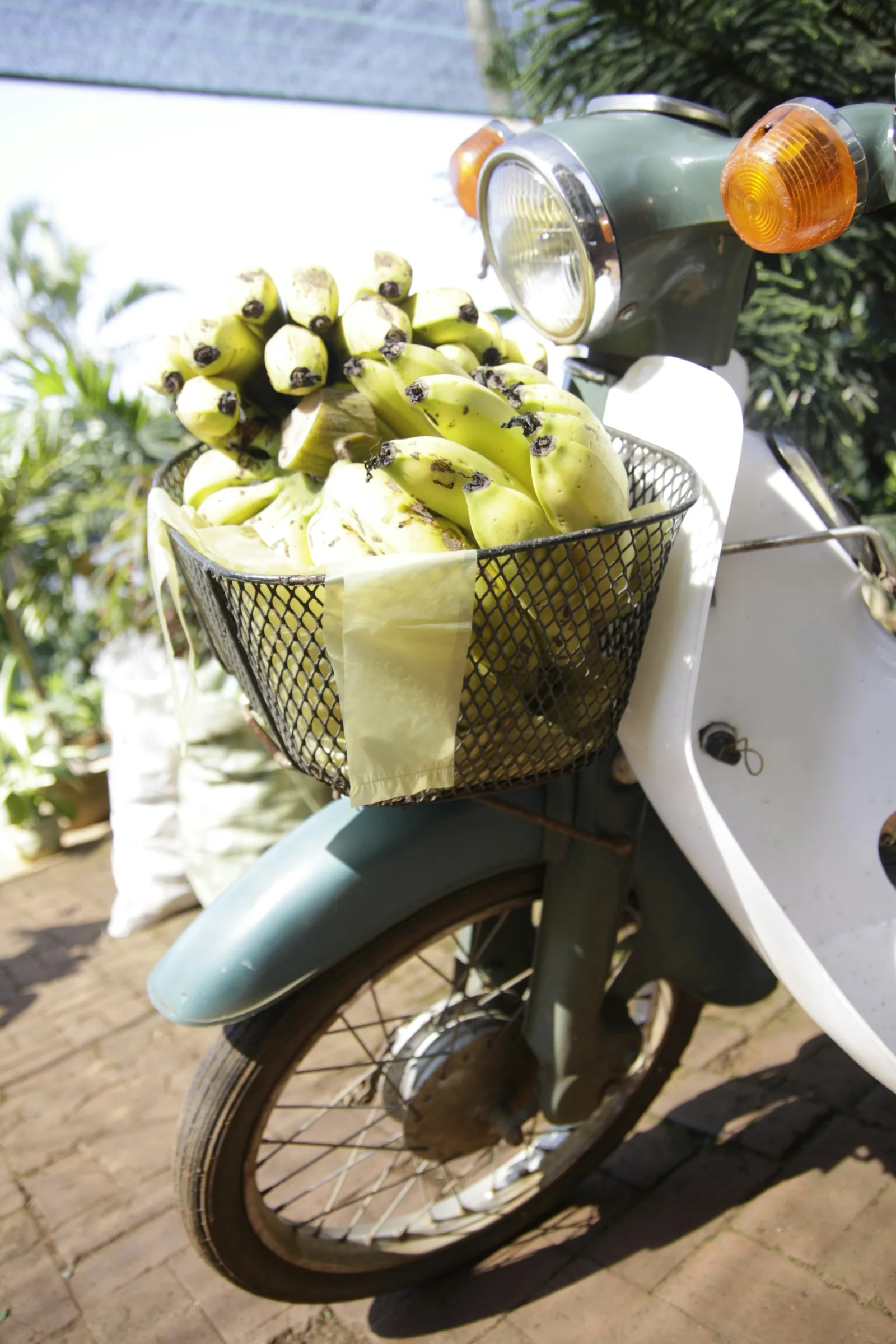
Writing about the 2017 milestone, Hiroshi Nakabe points to the Cub’s role in ordinary transport: deliveries, work and visits to the people who matter. His argument is that familiarity can make its significance easy to overlook.
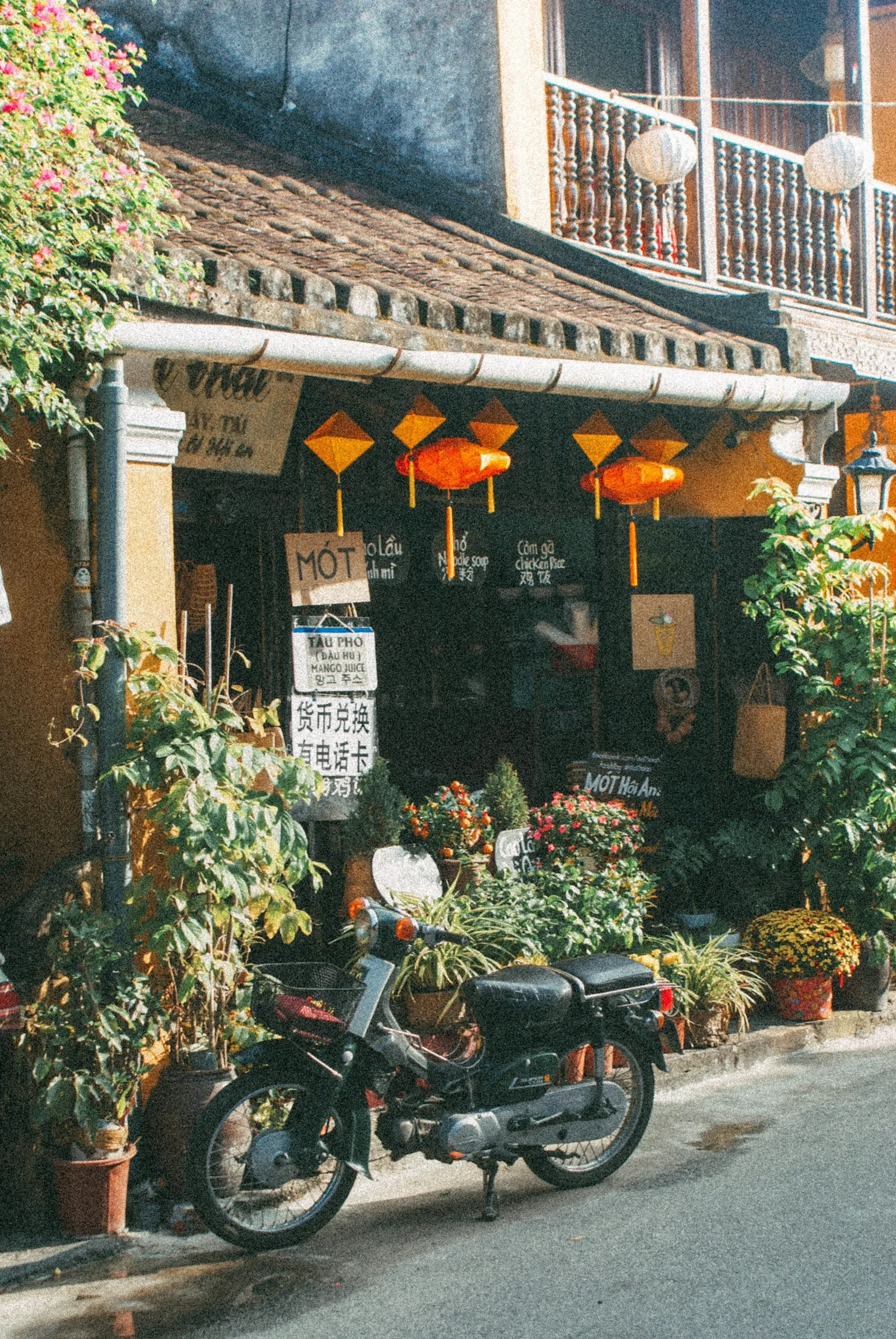
Look at Huỳnh Tấn Hậu’s photograph: the motorcycle sits among lanterns, plants and the furniture of a busy frontage. It is a contemporary street scene. Its appeal is the way the bike belongs to the surroundings instead of being isolated like an object in a showroom.

Look closely at an ordinary journey.
A design can travel while the reasons for using it change. A delivery rider and a weekend enthusiast may recognise the same silhouette but value different things about it.
That is a useful way to read this archive. The Cub is not one frozen image of Japan. It is a family of motorcycles with a long life in different places, and an invitation to be curious about those differences.
The practical questions make good starting points. What can a rider carry? Where can the bike be parked? Who supplies the parts? The answers bring the history down from a world map to the scale of a street, where a transport design actually has to earn its place.
The sources behind the story.
An original Cub Club summary and commentary. Factual references are below; personal interpretations are labelled in the text.
- Honda — Going Global: Southeast Asia
Asian Honda’s establishment, regional differences, retail support and local production.
Visit original source - Hiroshi Nakabe / Honda — The 100 Million Unit Production Milestone
The Cub as familiar everyday transport. The last section is editorial interpretation.
Visit original source